Drag

Your Industrial Vacuum Might Be LEV

And that changes your compliance responsibilities!

Across construction, refurbishment and surface preparation work, industrial vacuums are used every day to capture dust from grinders, planers, shotblasters and hand tools. They are such a normal part of the set-up that they are rarely questioned.

But here is something many contractors, site managers and even specifiers don’t realise…

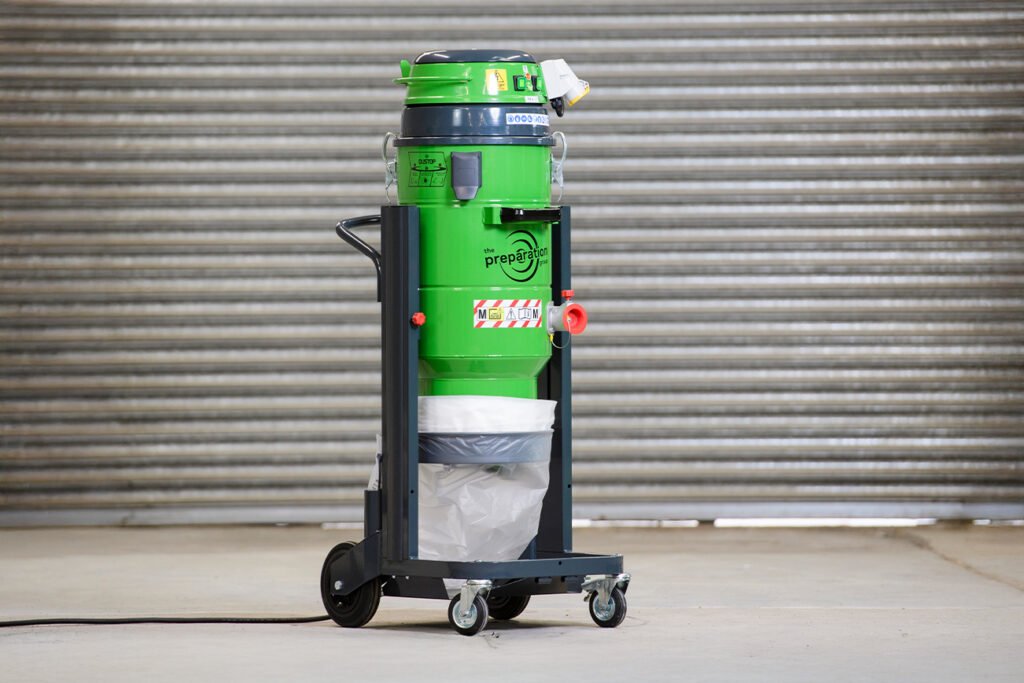
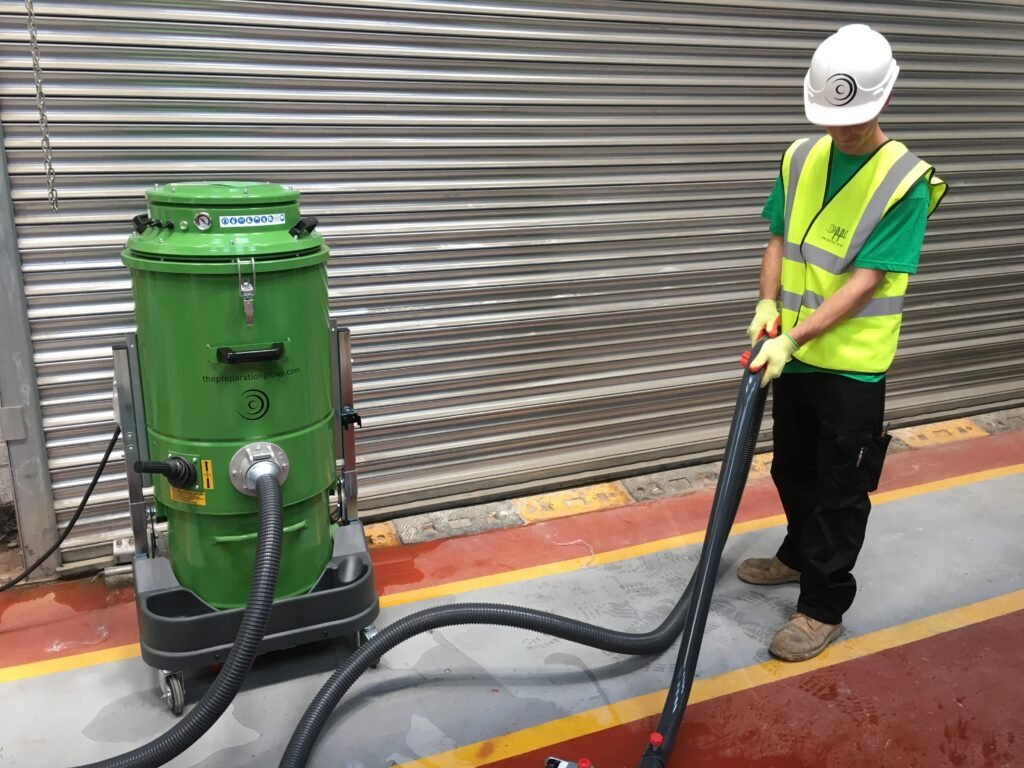
When an industrial vacuum is connected to a dust-producing tool, it is often functioning as Local Exhaust Ventilation (LEV).

And once that happens, it is no longer “just a vacuum”.

It becomes part of a dust control system that falls under COSHH regulations.

Understanding this distinction matters more than ever as dust exposure enforcement continues to increase across UK construction and refurbishment projects.

Why dust extraction matters in surface preparation

Appropriate and adequate dust extraction is essential when:

  • concrete grinding
  • shotblasting
  • planing
  • many adhesive removal processes like stripping

These processes are highly effective at preparing substrates, but they also generate fine airborne dust, including hazardous respirable crystalline silica.

Capturing that dust at source is critical.

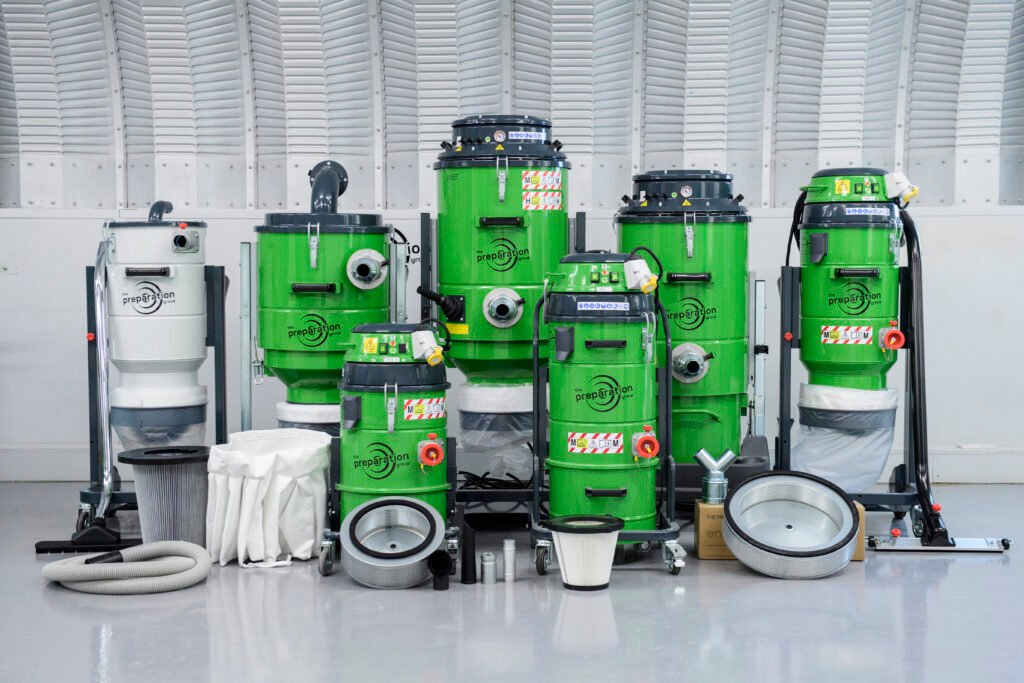
This is why grinders, planers and other preparation equipment are frequently connected to high-performance industrial vacuums and extraction units.

When those industrial vacuums actively capture airborne dust created by a tool, they form part of a Local Exhaust Ventilation system designed to control exposure.

When a vacuum becomes LEV

LEV is defined as a system that captures dust, fumes or contaminants at source before they enter the breathing zone of workers.

In practical terms on site, this often includes:

  • grinders connected to industrial vacuums
  • planers or scrabblers with extraction ports
  • handheld surface preparation tools with vacuum attachments
  • enclosed shotblasting systems with dust collectors

When these systems are operating correctly, they significantly reduce airborne dust levels and improve site safety.

But because they are controlling hazardous substances, they fall within the scope of COSHH (Control of Substances Hazardous to Health).

The compliance detail many people miss

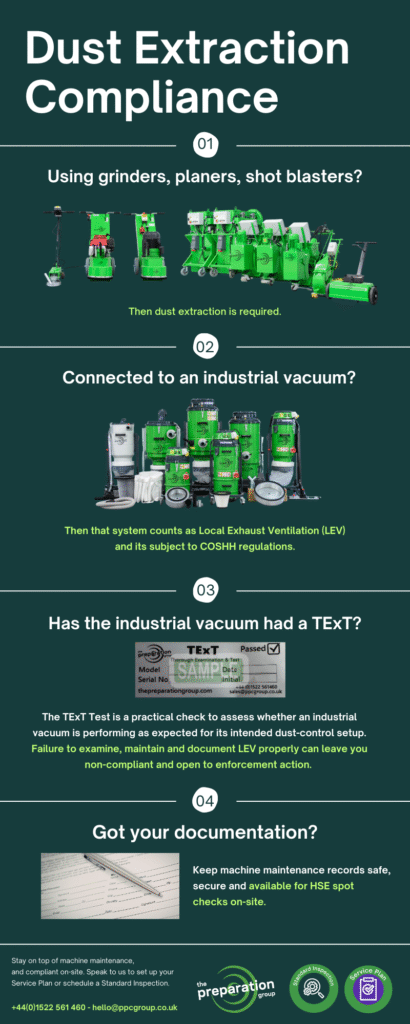
Under COSHH regulations, LEV systems must undergo a Thorough Examination and Test (TExT) at least every 14 months.

This test confirms that the system is still performing as intended by checking factors such as:

  • airflow
  • suction performance
  • system integrity
  • filter condition
  • capture effectiveness

Without this verification, there is no guarantee that the system is actually controlling dust exposure effectively, and risks machines being non-compliant.

In recent years, many contractors have been surprised to learn that the industrial vacuum units they use every day fall into this category.

Why extraction performance can change over time

Even high-quality extraction units will gradually lose efficiency if they are not maintained correctly.

Common issues include:

  • partially blocked filters
  • worn seals
  • damaged hoses
  • reduced airflow
  • incorrect attachments
  • general wear from heavy site use

Any of these can reduce the capture efficiency of the system.

The equipment might still appear to be working, but the actual dust control performance could be significantly reduced.

This is why regular servicing, maintenance and testing are essential.

Practical steps contractors should take

For contractors and facilities teams carrying out mechanical preparation work, a few simple steps can make a significant difference:

  • ensure dust extractors are correctly matched to the tools being used
  • inspect hoses, seals and attachments regularly
  • replace filters as recommended by the manufacturer
  • confirm airflow indicators are functioning
  • ensure LEV systems undergo the required Thorough Examination and Test (TExT)

These checks help ensure that dust control systems continue to perform as intended on site.

How we support contractors at The Preparation Group

At The Preparation Group, dust control and surface preparation go hand in hand.

Our work supporting contractors includes:

  • supplying high-performance industrial dust extraction systems
  • advising on the correct extraction equipment for preparation tools
  • servicing and maintaining extraction units used in demanding environments
  • supporting compliance through inspection and testing

Dust extraction is rarely considered the most exciting part of surface preparation work.

But when it is done properly, it protects workers, keeps sites compliant and helps ensure that the preparation work itself performs as intended.

And in many cases, it starts with recognising that the vacuum connected to your machine may actually be functioning as LEV.

If you’re using extraction equipment on site

If your team is using grinders, planers, shotblasters or handheld preparation tools connected to industrial vacuums, it is worth reviewing whether those systems fall within LEV requirements.

Understanding how the system performs, and ensuring it is maintained and tested correctly, is a simple step that can prevent compliance issues and improve working conditions on site.

If you need advice on selecting extraction equipment, maintaining your current systems, or arranging testing for units used in mechanical surface preparation, our team is always happy to help.

☎ +44 (0)1522 561 460 📧 hello@ppcgroup.co.uk

Similar Posts

Similar Posts