Why dust extraction matters in surface preparation
Appropriate and adequate dust extraction is essential when:
- concrete grinding
- shotblasting
- planing
- many adhesive removal processes like stripping
These processes are highly effective at preparing substrates, but they also generate fine airborne dust, including hazardous respirable crystalline silica.
Capturing that dust at source is critical.
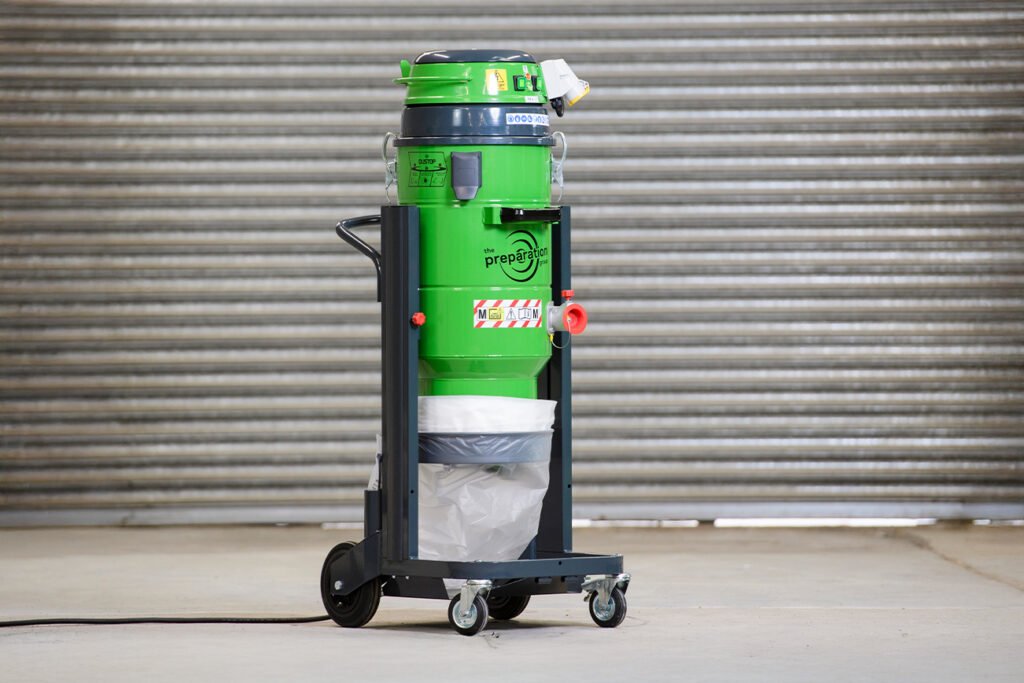
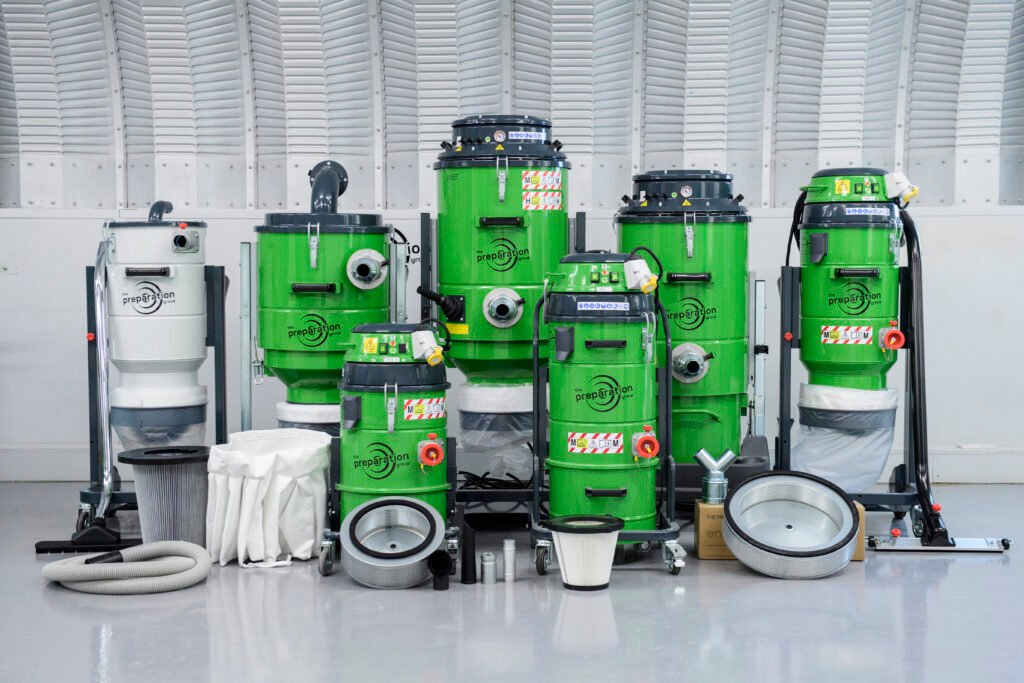
This is why grinders, planers and other preparation equipment are frequently connected to high-performance industrial vacuums and extraction units.
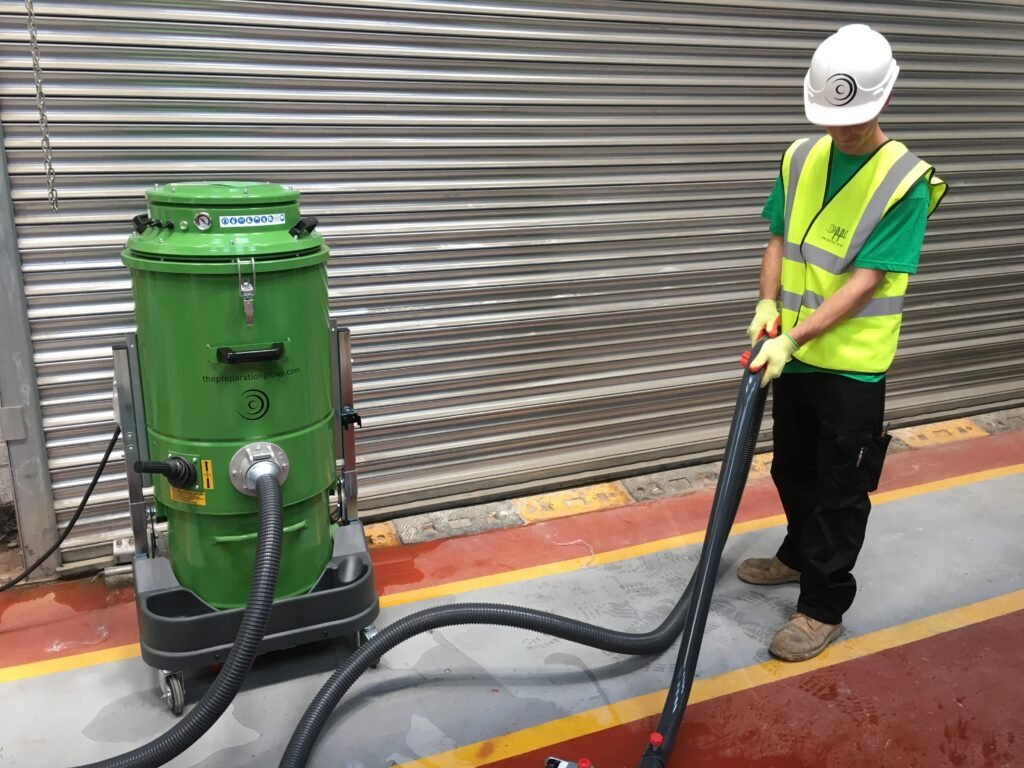
When those industrial vacuums actively capture airborne dust created by a tool, they form part of a Local Exhaust Ventilation system designed to control exposure.
When a vacuum becomes LEV
LEV is defined as a system that captures dust, fumes or contaminants at source before they enter the breathing zone of workers.
In practical terms on site, this often includes:
- grinders connected to industrial vacuums
- planers or scrabblers with extraction ports
- handheld surface preparation tools with vacuum attachments
- enclosed shotblasting systems with dust collectors
When these systems are operating correctly, they significantly reduce airborne dust levels and improve site safety.
But because they are controlling hazardous substances, they fall within the scope of COSHH (Control of Substances Hazardous to Health).
The compliance detail many people miss
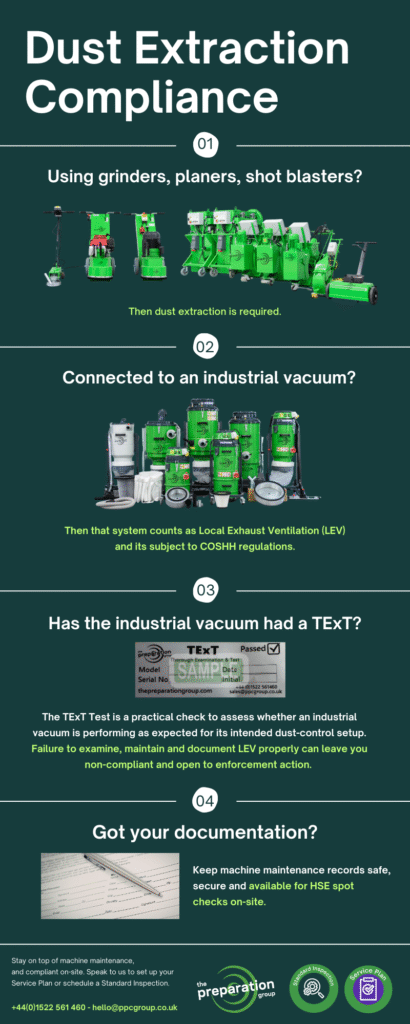
Under COSHH regulations, LEV systems must undergo a Thorough Examination and Test (TExT) at least every 14 months.
This test confirms that the system is still performing as intended by checking factors such as:
- airflow
- suction performance
- system integrity
- filter condition
- capture effectiveness
Without this verification, there is no guarantee that the system is actually controlling dust exposure effectively, and risks machines being non-compliant.
In recent years, many contractors have been surprised to learn that the industrial vacuum units they use every day fall into this category.