Drag

Why mechanical uplift and surface preparation determine whether recovery lasts after flood damage

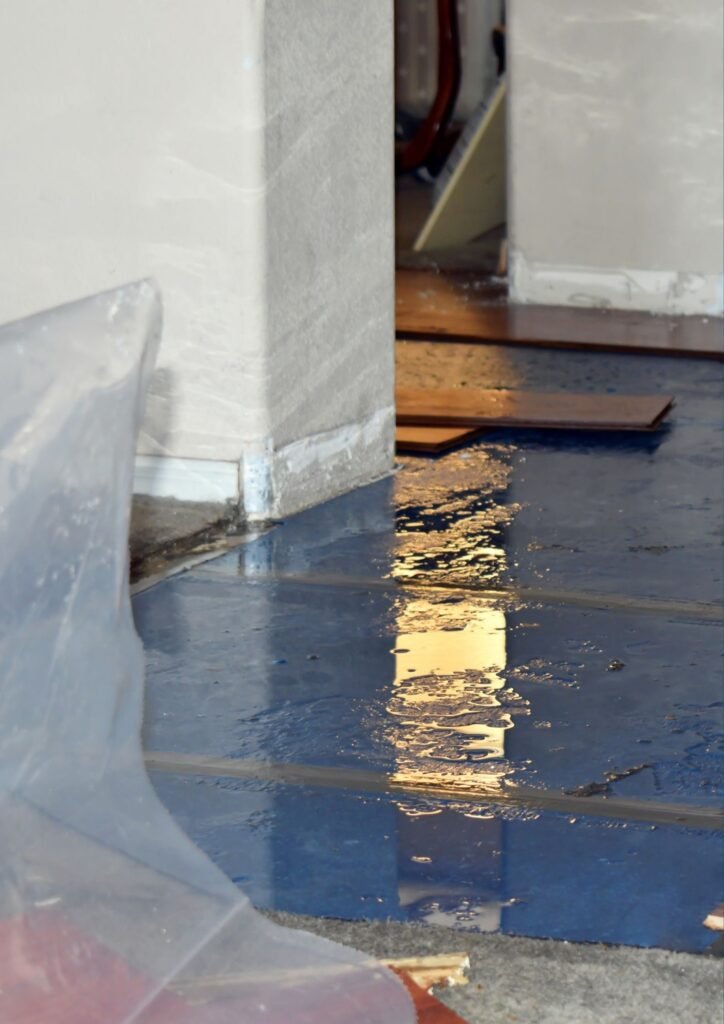
Flooding doesn’t just damage buildings. It can also drastically alter and change substrates. With flood warnings becoming more frequent across the UK, more facilities, commercial sites and residential buildings are experiencing water ingress. When that happens, attention understandably goes to drying, cleaning and reinstatement.

But at floor level, flood recovery is not primarily a cleaning problem. And as you can well imagine, it is a surface preparation problem before it is a finishing one.

What looks like surface damage is often just the visible symptom of deeper changes within the floor system.

What flood damage really does to floors

When water enters a space, floor systems, coatings, adhesives and screeds respond in different ways. Flooding typically changes:

  • Moisture content within slabs and screeds
  • Bond integrity between coatings and substrate
  • Contamination beneath floor finishes
  • Localised softening or breakdown of adhesives
  • Surface profile and compatibility for future coatings

These changes are not always visible once standing water is removed. They could appear later down the line when new coatings have been applied as:

  • blistering
  • loss of adhesion
  • odour
  • patch failure
  • premature breakdown of new finishes

One of the most common mistakes after flood damage is replacing finishes too early, before the substrate has been properly exposed, assessed and mechanically prepared.

Why removal is not just a case of ‘ripping out’

One thing that is worth remembering when dealing with flooding is that the controlled removal of flood-damaged coatings is not the same as demolition. We much prefer ot think of it as the diagnostic stage of recovery.

Removing compromised rubber, vinyl, resin or adhesive systems allows the substrate to be properly inspected, tested and prepared. It exposes the true condition of the floor so decisions about reinstatement are based on reality, not assumptions (which is often where others might get caught out).

After more than 35 years working in surface preparation, restoration and refurbishment, we see the same pattern repeatedly:

  • Projects that recover well after flooding start with proper mechanical uplift and honest substrate assessment.
  • Projects that rush past this stage tend to pay for it later in rework, downtime and shortened floor life.

Choosing the right method for uplift

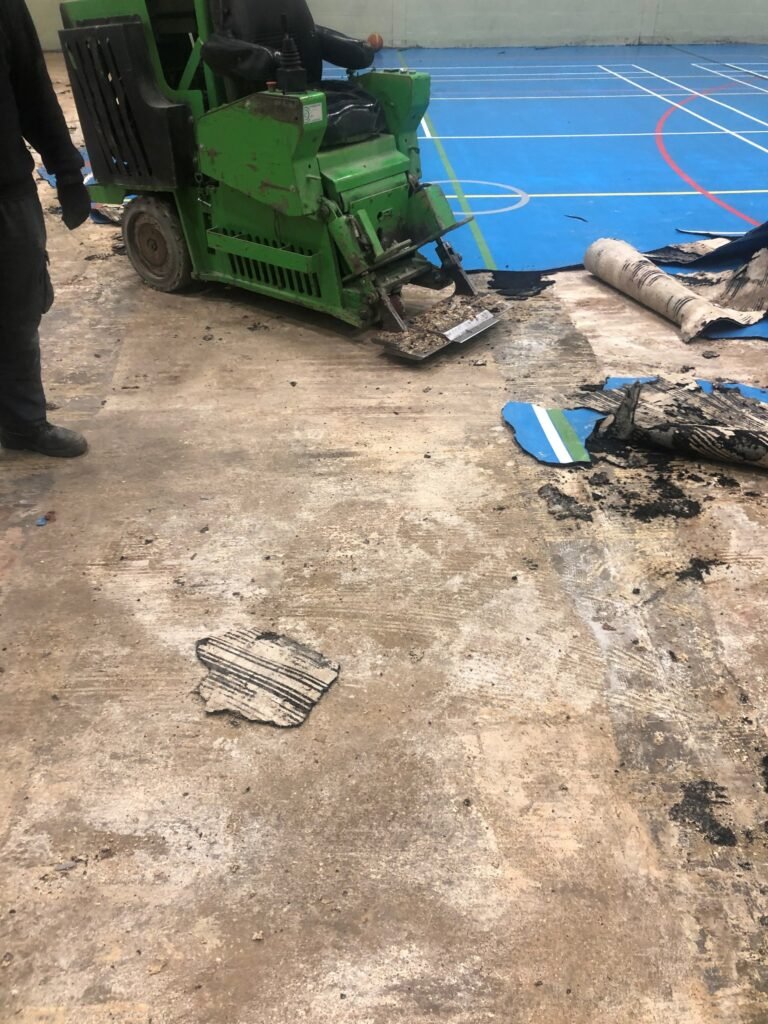
Flood-damaged coatings fail unpredictably. What we mean by that is that some areas release cleanly, whilst others might tear, smear or delaminate in fragments. You never know what’s going on under the surface… until you get there. So that’s why your machine choice matters.

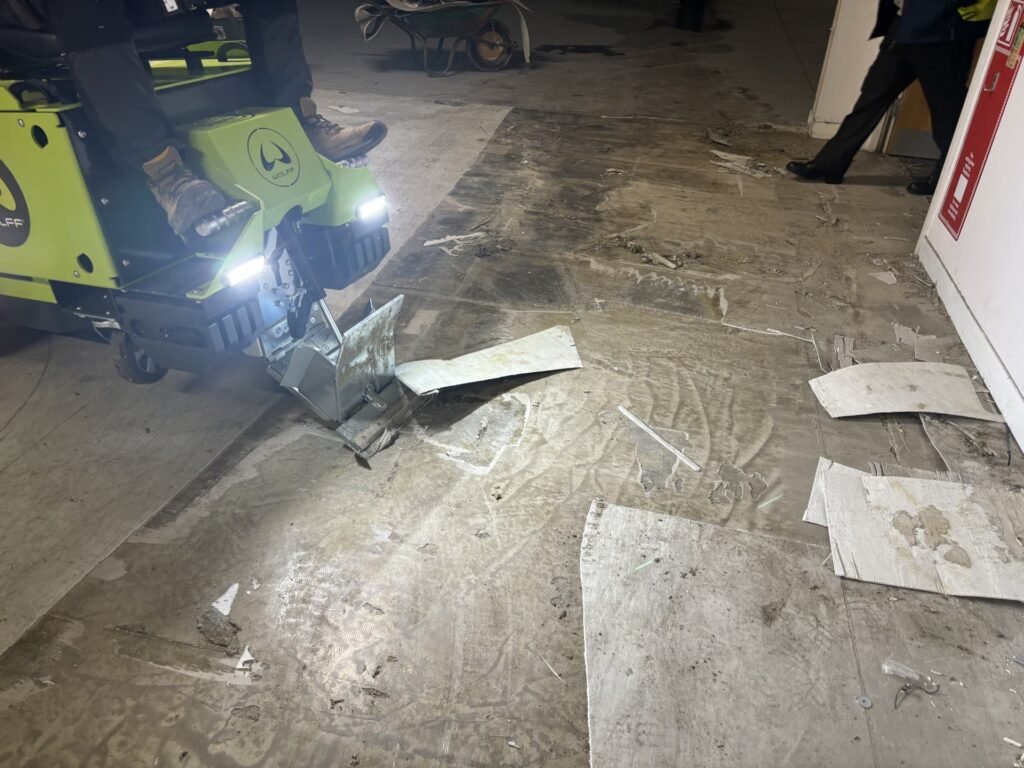
For controlled uplift of damaged coatings, especially over larger areas, ride-on strippers such as the Wolff Independence allow:

  • efficient removal of bonded floor systems
  • reduced manual handling
  • controlled uplift without excessive substrate damage
  • consistent progress over larger floor areas
  • battery operation suitable for internal environments

In many flood recovery scenarios, the Wolff Independence will remove the bulk of the existing floor system as well as much of the adhesive. That creates access to the substrate for proper assessment.

This is where recovery becomes preparation.

Removing residue and creating a proper key

Uplift is often the first stage when addressing flood damage. But remember, it is not the final preparation stage.

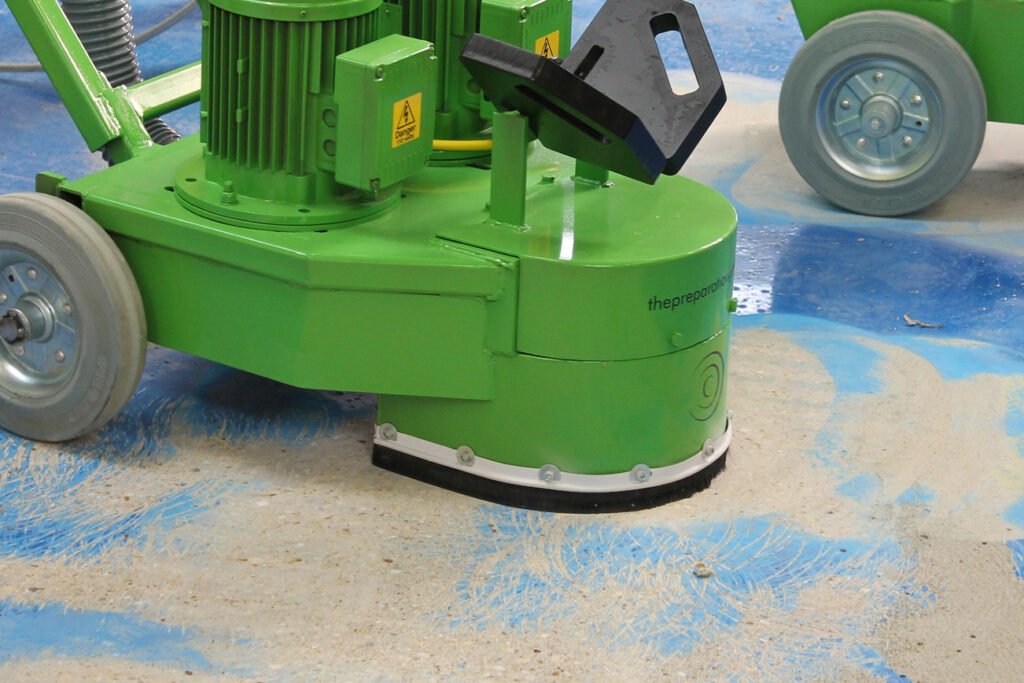
Once coatings have been removed, residue from adhesives or contaminants can often remain at bond level. That residue needs to be mechanically removed to create a surface suitable for future systems.

Machine selection at this stage depends on a range of considerations that need to be made and risk assessed on-site. For example, access and environment will inform the selection of machines such as:

  • PPC 250 grinders – often better suited to residential or restricted access environments
  • PPC 400 shotblasters – typically more appropriate in commercial and industrial settings where access allows and production rates matter

Both approaches aim to achieve the same outcome: a mechanically prepared surface with the correct profile and key for future coatings or screeds.

This is where flood recovery moves from “removal” into proper surface preparation for long-term performance.

What does good flood recovery look like in practice?

Good flood recovery at floor level, and from our perspective, follows a simple principle:

Expose. Assess. Prepare. Then reinstate.

Not the other way around. No switching it up!

This approach:

  • reduces the risk of future failure
  • protects new finishes
  • shortens long-term downtime
  • avoids repeat disruption
  • improves lifespan of reinstated systems

Flood damage recovery isn’t about making a floor look better quickly. It is about ensuring the surface you rebuild onto truly is fit for purpose.

How we support recovery here at The Preparation Group

This is the type of work we take care of and support every week through Full Project Solutions. From mechanical uplift of damaged floor systems, through to the preparation and profiling of substrates, and getting surfaces ready for reinstatement.

Flood recovery requires controlled methods, appropriate machinery selection and sequencing. It is rarely a single-machine job. The correct approach depends on the system thickness, bond condition, access, contamination and what type of finish and coating the floor needs to support in the future.

If you’re dealing with flood-affected floors in residential, commercial, industrial, public or operational environments, early preparation decisions shape everything that follows. Controlled removal and preparation at the start is what makes recovery predictable and possible.

If you have upcoming projects where water ingress has affected floor systems, it’s worth having the preparation conversation early. Getting the surface right first is what prevents problems returning later.

Get in Touch with us

Whether you need to remove a flood-damaged floor or you’re looking for the right equipment to support recovery work in-house, mechanical surface preparation is the stage that determines long-term performance.

If you want advice on selecting uplift or preparation equipment for flood recovery scenarios, or you need support delivering the work on live projects, our team is always happy to talk through options.

Call us on +44(0)1522 561 460 to speak to one of our expert Team, or drop an enquiry to hello@ppcgroup.co.uk and we will be more than happy to help.

Similar Posts

Similar Posts